Reflections of an immigrant on America at 250
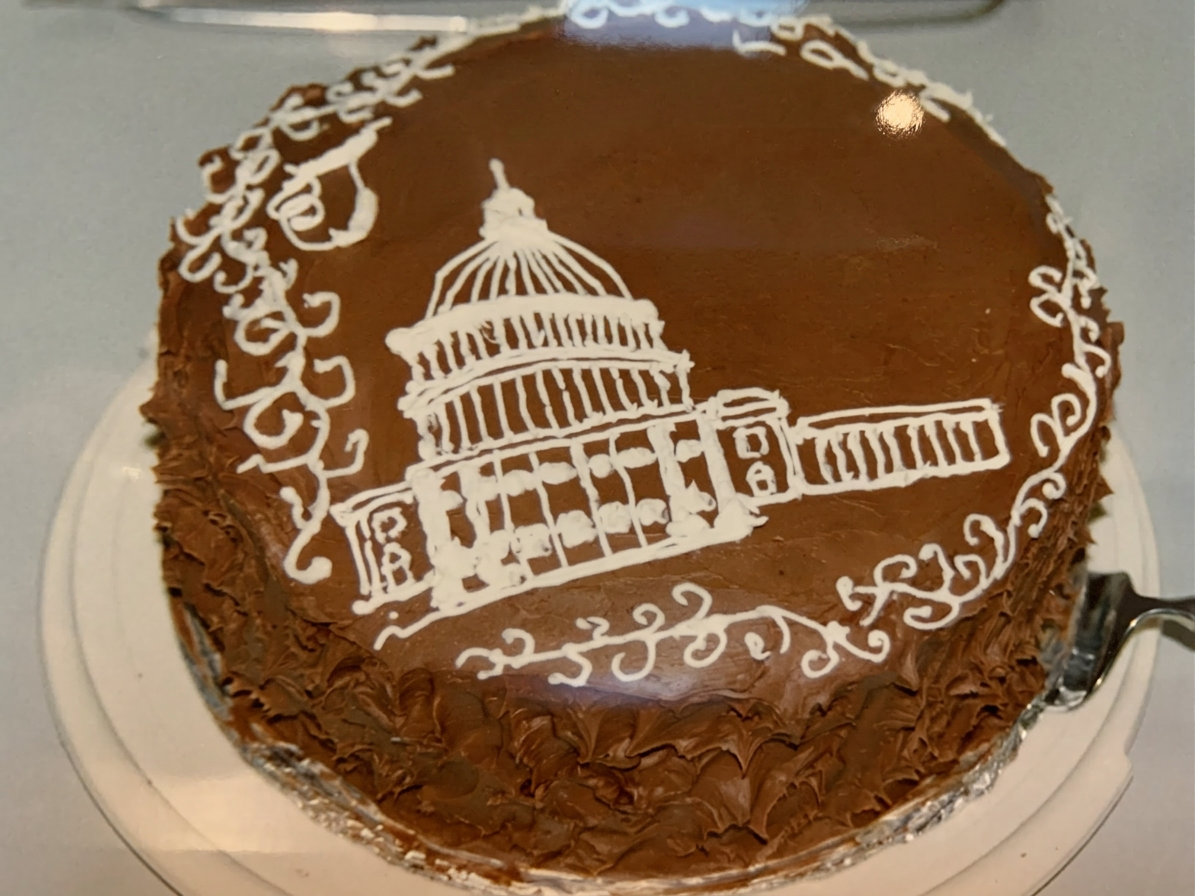
It seems I don’t want to share a thought until I think it has been fully formed, with all the references and footnotes brought in and all the arguments made as airtight as I have the patience and focus to draft before I give up and wallow in the gloriously inevitable imperfection of run-on sentences.
This has been building for a while, so buckle up. This is what you get for giving me a statutory holiday with an epically patriotic theme.
Over the months leading up to the 250th anniversary of the United States, I found myself feeling increasingly disconnected from this national milestone being promoted as a pinnacle achievement of…what, exactly?
What is the United States celebrating today at 250? And who am I to question that?
I became an American citizen in 2010, after having been in the United States since 1988, while retaining my Canadian citizenship. But it wasn’t until 2016 that I began to understand that the full responsibility of citizenship includes the work of defending the rights of those at the ragged edge of democracy.
Citizenship includes speaking up for those whose freedoms, rights, safety, dignity, and land have been stripped away by leaders claiming to act in the name of that very democracy.
Humans have a negativity bias baked in as a survival mechanism. For most of our evolutionary history, missing a threat was more costly than missing an opportunity. That bias has become more challenging for me as I have looked and listened in the United States over the past couple of years. The rustling sound of potential threats in the tall grass of media, policy, and public life feels especially real on many days.
But I do not want fear to have the last word.
While I worked at the Canadian Embassy in Washington, DC, from 1988 to 2003, in a city founded on patriotism, I developed a deep sense of what patriotism meant to me.
It is not simply pride in a nation’s accomplishments, symbols, or stated values.
True patriotism includes learning, owning, acknowledging, and continually making amends for the dark and troubling parts of one’s national history — not just celebrating the pretty parts and powerful achievements, many of which are inseparable from, or paid for by, the ugly.
Nations do not accomplish things, for good or ill. Nations do not hold values.
People do.
People do, in communities and as individuals, as leaders, followers, witnesses, resisters, builders, and repairers.
People in community discover through lived experience the values they hold dear. Those values become part of their identity. There is nothing easy about that, but it is part of the human wiring that drives us to connect with each other and form relationships.
Some values seem near-universal, almost pan-human, transcending national boundaries. Others are quirky regional tastes and customs. I’m talking about you, poutine.
I have been dismayed to watch values used increasingly as divisive rallying cries to polarize people against each other in a quest for power and control with those values dressed up as patriotism.
Countries are abstract concepts. I have a world atlas that my dad gave me in 1984. It depicts some countries and borders that no longer exist, and others that had not yet come into being.
I also discovered, after I left the Embassy, that no matter how much you think you are giving to it, a country cannot love you back.
Only people can do that.
I find that thought oddly uplifting on what had been feeling to me like a day of celebration that had not earned its keep.
In the first scene of the pilot episode of Aaron Sorkin (also creator of The West Wing)‘s The Newsroom, a college student asks a panel of journalists, “Can you say why America is the greatest country in the world?”
After the first two panelists respond with polished platitudes, something breaks open in news anchor Will McAvoy.
“It’s not the greatest country in the world. That’s my answer.”
The room falls silent. He takes a breath and recites a blistering stream of statistics: literacy, math, science, life expectancy, infant mortality, incarceration. Aaron Sorkin was working from the data of the day, and the point was not subtle. The United States had become very good at telling itself a story that did not line up cleanly with the evidence.
Then McAvoy turns to what the country had been capable of at its best: great public works, scientific achievement, cultural courage, sacrifice, ambition, and a shared value placed on being well-informed.
Not perfect. Never perfect.
But capable.
The preamble to the Constitution reminds us that the Founders aspired to “a more perfect Union.”
That phrase matters. It does not claim perfection. It names a direction.
The United States began as a messy, ragged, best-effort experiment: a weak central government joining states that would jostle for power for centuries; a founding document filled with soaring language and devastating exclusions; a nation declared into existence on land already occupied and governed by Indigenous peoples; a democracy that left voting rights largely to the states.
The Founders were not especially generous with the franchise. In the early Republic, voting rights depended heavily on state law, property, taxpaying, race, sex, and status. Some free Black men could vote in some states, under some conditions. New Jersey even extended the vote to some property-owning women before later taking it away.
That history matters because it tells the truth about the American promise: it was real, and it was incomplete from the start.
“It’s not the greatest country in the world,” The Newsroom‘s McAvoy says.
“But it could be.”
I keep coming back to that.
Why limit greatness to any one nation? I understand the impulse to care first for one’s own family and neighbors. That is human. That is good. But we sell ourselves short as a species when our generosity stops at national borders, or political ideology, or race, or religion, or the comfort of people who already agree with us.
Greatness is hollow if it is defined and achieved at the expense of others.
I am dismayed by policy decisions that have led to more people — in the United States and abroad — becoming sickened, impoverished, displaced, or stripped of rights and bodily autonomy.
We can do better.
We must do better.
And in the end, that is what I am willing to celebrate today: not perfection, not domination, not mythology, and not the demand that love of country require silence.
I am willing to celebrate the renewal of my commitment as a citizen to the continuation of the original promise: the enduring aspiration toward greater perfection, and the work of seeking a shared vision of that perfection that includes better lives for all of us.
That is what we celebrate today: the promise that we can be better, and do better, together.
Happy birthday, my fellow Americans.
Stay safe, stay cool, and keep believing in each other.
Here’s to the next 250.

